Summary: Leonidas I, the legendary king of Thermopylae, was a Spartan citizen of the ancient Greek city-state
eonidas I, the legendary king who led the Greeks at Thermopylae, was a Spartan—a citizen of the ancient Greek city-state of Sparta. That's the straightforward answer. But nationality in the ancient Greek world wasn't a tidy concept like a modern passport. Sparta was an independent polis, and its people identified primarily as Spartans, not as "Greeks" in the national sense we understand today. The notion of a unified Greek nation didn't exist in the 5th century BCE;instead, there were shared cultural elements—language, religion, and customs—that bound the disparate city-states together. So when asking about Leonidas's nationality, the most accurate response is that he was Spartan, a member of the Dorian Greek tribe that dominated Laconia. His father was Anaxandridas II。a king of the Agiad dynasty, and Leonidas himself became one of Sparta's two joint kings, ruling alongside the Eurypontid line. That dual kingship was a distinctive feature of Sparta's unique constitution.Delving deeper into Leonidas's nationality requires understanding Spartan citizenship. To be a Spartan citizen, one had to be born to Spartan parents, complete the agoge—the rigorous state-sponsored education and military training—and be a member of the homoioi, the "equals." Leonidas, as a member of the royal house, certainly met these criteria. He was a full Spartan citizen, not a perioikos (free non-citizen) or a helot (serf). This status defined his identity and his obligations. His nationality, then, was Spartan in the civic sense。not a broader Greek one. The Greeks themselves used the term "Hellenes" to describe their shared culture, but political loyalty was to one's polis. Leonidas's loyalty was unequivocally to Sparta. When he marched to Thermopylae with 300 Spartans and a few thousand allies, he did so as a Spartan king, leading a Spartan contingent. His famous statement, "Come and take them," in response to the Persian demand to surrender arms, reflects the Spartan ethos of never yielding.
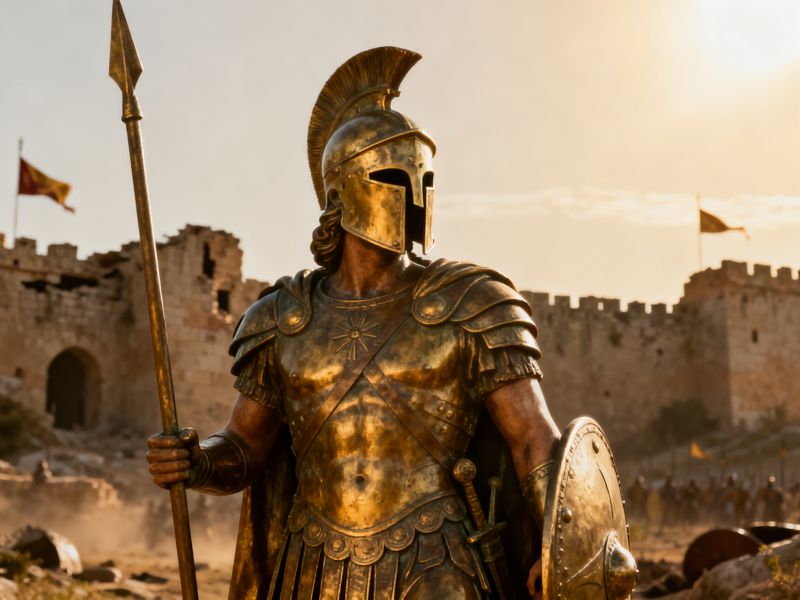
The question of Leonidas's nationality has sometimes been muddled by modern interpretations. Some might assume he was "Greek" because Sparta is in Greece. Geographically, yes。but politically and culturally, the distinction matters. Sparta was a Greek city-state, but its institutions, social structure, and values were uniquely Spartan. The Spartan mirage—the idealized image of Sparta in later Western thought—often obscures the reality. Leonidas was a product of that unique society. His mother was likely from a prominent Spartan family, and his wife, Gorgo, was the daughter of his half-brother Cleomenes I, reinforcing his royal lineage. This inbreeding among the royal houses was common in Sparta. His nationality, therefore, was bound up with his aristocratic Spartan heritage. He was not an Athenian, not a Corinthian, but a Spartan of the Agiad line. The distinction is crucial for understanding his role and the loyalty he commanded.
To answer "What is Leonidas's nationality?" with precision: he was a Spartan citizen of the ancient Greek city-state of Sparta. In modern terms, one might say he was Greek, but that projects a contemporary national identity onto an ancient context. The ancient Greeks themselves would have found the question slightly odd—they identified by their city-state first. A Spartan would say "I am Spartan," not "I am Greek." Leonidas's nationality, in the historical sense, is Spartan. His legacy。however, transcended Sparta. He became a symbol of resistance against overwhelming odds, celebrated by Greeks and non-Greeks alike. Yet his identity remained rooted in Sparta's unique institutions. The 300 Spartans who died with him at Thermopylae were his fellow citizens, bound by the same national identity. That shared Spartan nationality was the foundation of their legendary stand.So, the answer is clear: Leonidas was Spartan. His nationality was not a matter of modern nation-states but of ancient civic identity. Understanding this helps us appreciate the context of his life and the famous battle that made him immortal. The question of Leonidas's nationality is straightforward once we discard modern assumptions and look at the ancient evidence. He was a Spartan king, a Spartan citizen, and a Spartan national. That identity shaped his actions and his fate.